
Use case diagram
Use case diagrams are unfashionable and still useful for one job: agreeing scope with people who do not read technical diagrams. The boundary line is the whole point.
Keep the use cases at the level of goals, not steps.
#When to draw one
Scoping conversations with non-technical stakeholders.
Requirements documents where the actors matter.
Explaining what a system does without explaining how.
#What is on the diagram
Element | Meaning |
|---|---|
Actor | A person or system outside the boundary |
Use case | A goal the system helps achieve |
System boundary | The box: what is in scope |
Include | One use case always uses another |
Extend | One use case sometimes extends another |
#A worked example
Actors, a boundary, and include and extend relationships:
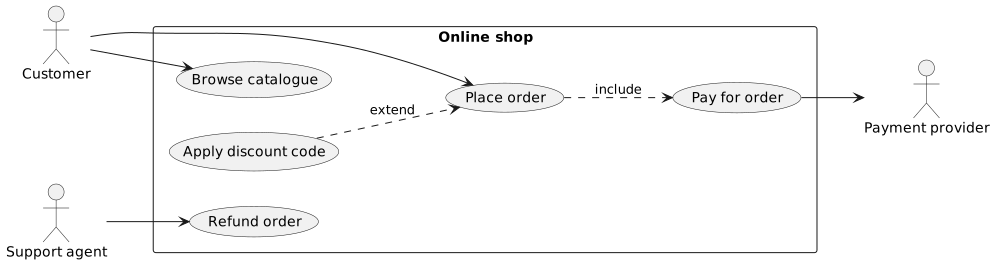
The source, which you can paste into a new diagram and edit:
#A few things that catch people out
Include means always; extend means sometimes. Swapping them changes the meaning.
Actors go outside the boundary. An actor inside it is a component, not an actor.
Keep use cases to goals. "Click the save button" is a step, not a use case.
#Related
Four types cover most of it.