
Event modeling
Event modeling lays a system out along time: commands on top, events in the middle, read models below. It is a design technique, and its diagrams are unusually good at showing where state actually comes from.
It suits event-driven systems, but the timeline layout helps even when the system is a plain database.
#When to reach for one
Designing an event-driven system before the first line of code.
Finding the read models nobody planned but everyone needs.
Workshops, where the timeline gives everybody the same reference frame.
#How to draw it in Capable
Route | Use when |
|---|---|
Excalidraw | Workshop mode; event modelling is a collaborative technique. |
draw.io | The tidied-up version afterwards, for the documentation. |
Mermaid | A simplified timeline of the same model, for a page summary. |
#A worked example
The command and event sequence behind placing an order:
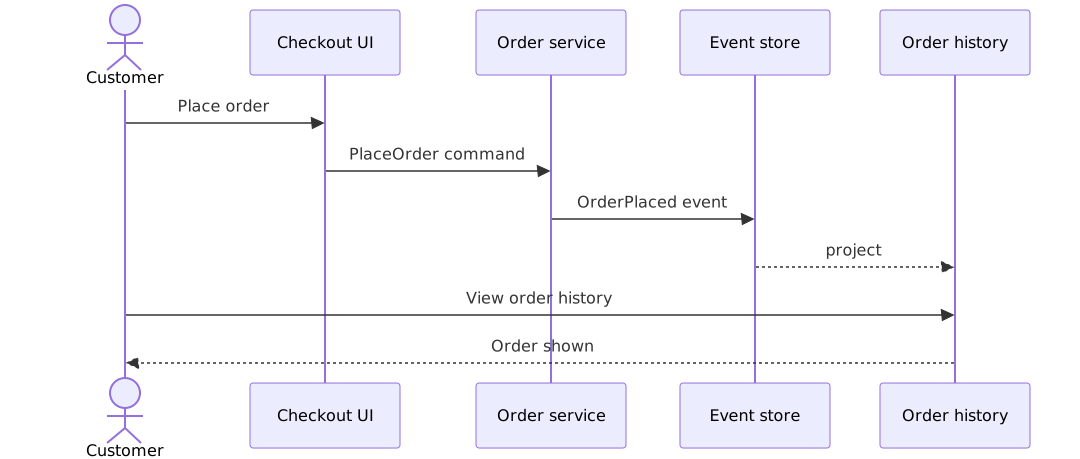
The source, which you can paste into a new diagram and edit:
#A few things that catch people out
Events are facts in the past tense. OrderPlaced, not PlaceOrder.
A read model with no event feeding it is a design gap, and the layout makes it obvious.
Keep the swim lanes in the same order in every diagram or the technique loses its value.
#Related
Cheap to change means it stays true.