
Package diagram
Package diagrams show grouping and dependency at the module level. They are most valuable when you suspect a dependency cycle, because a cycle is immediately visible.
Small, cheap, and worth drawing before a refactor.
#When to draw one
Planning a refactor or a module split.
Documenting a codebase's structure for new joiners.
Finding dependency cycles.
#What is on the diagram
Element | Meaning |
|---|---|
Package | A folder-shaped box |
Dependency | A dashed arrow: this package uses that one |
Nesting | Packages drawn inside packages |
Import and access | Stereotypes on a dependency, when the distinction matters |
#A worked example
Packages with a dependency cycle worth arguing about:
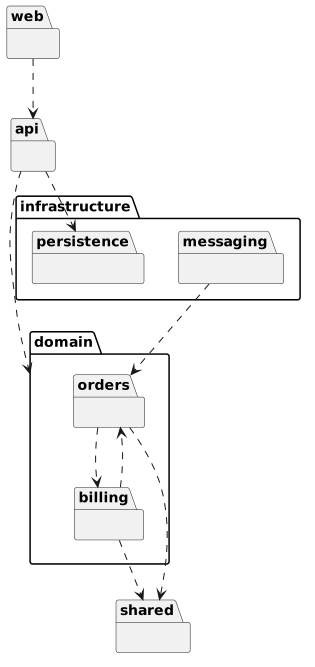
The source, which you can paste into a new diagram and edit:
#A few things that catch people out
Arrows point from the dependent package to the one it depends on. Reversing them inverts the meaning.
Cycles are the reason to draw this. Do not tidy them away; that is the finding.
Keep it to one level of nesting or it becomes unreadable.
#Related
Four types cover most of it.