
eCommerce database (ERD)
Comparing this against the DBML version of the same schema is the fastest way to see what each format is for.
#What this example shows
Four entities with their keys marked.
A join entity drawn explicitly.
Relationships that state both ends.
#A worked example
Open it, edit it, or copy the source below.
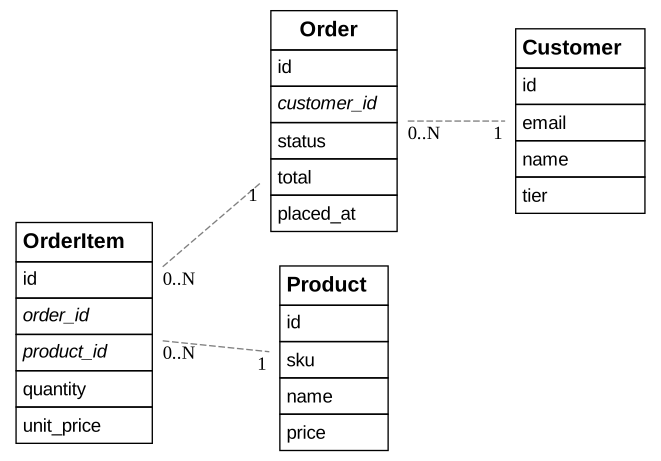
The source, which you can paste into a new diagram and edit:
#Making it your own
A join entity deserves to be drawn; it has its own columns.
Keep attribute lists short. This is documentation, not a schema dump.
Compare with the DBML example to see which format suits your purpose.
#Related
Four symbols, and that is the language.