
Event modelling (Mermaid)
Event modelling lays a system out along time: commands in, events recorded, read models projected. A sequence diagram captures the essential ordering without the full workshop board.
#What this example shows
Commands in the imperative and events in the past tense.
A projection step, which is where read models come from.
A read model queried separately from the command path.
#A worked example
Open it, edit it, or copy the source below.
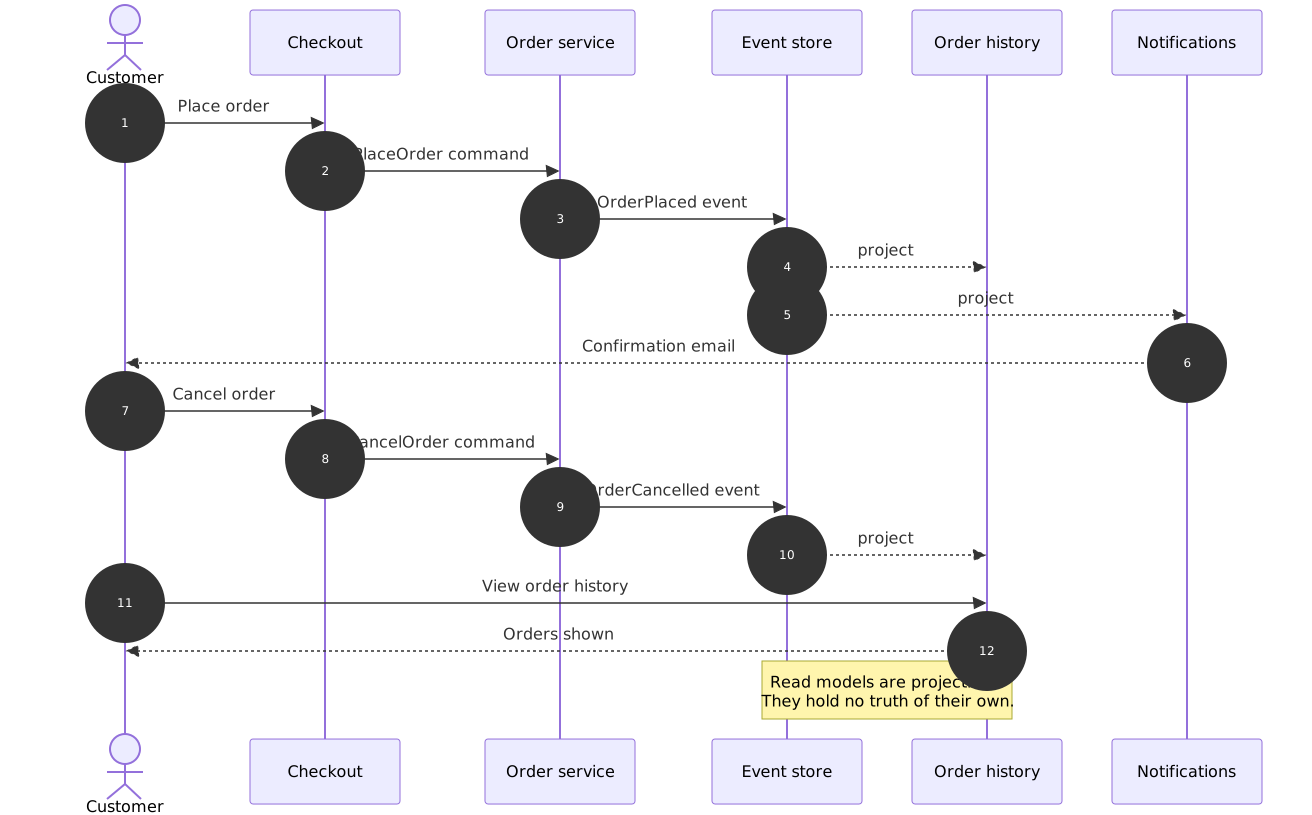
The source, which you can paste into a new diagram and edit:
#Making it your own
Events are facts in the past tense: OrderPlaced, not PlaceOrder.
A read model with no event feeding it is a design gap.
For the full workshop version with swimlanes, use Excalidraw.
#Related
Copy it. Change one line. See what happens.