
TCP header (Bytefield)
The TCP header is the standard example for byte field diagrams, and it exercises most of what Bytefield can do.
#What this example shows
Column headers, which number the bytes across the top.
Boxes spanning several bytes.
Per-field colour, defined once and reused.
#A worked example
Open it, edit it, or copy the source below.
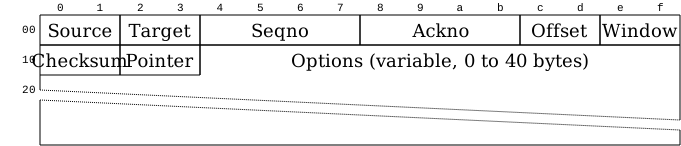
The source, which you can paste into a new diagram and edit:
#Making it your own
Bytefield counts bytes; PacketDiag counts bits. Pick the one that matches your spec.
draw-gap is how variable-length regions are drawn honestly.
State the endianness in the surrounding text.
#Related
The offsets are computed, not drawn.