
Sequence diagram
The most consistently useful UML diagram. It answers a question people ask constantly: what actually happens when someone does this?
It ages well too, because interactions change less often than structures.
#When to draw one
API and integration documentation.
Debugging discussions, where the order is the argument.
Design reviews of anything asynchronous.
#What is on the diagram
Element | Meaning |
|---|---|
Participant | A service, component or person |
Solid arrow | A call |
Dashed arrow | A return |
Activation | The bar showing a participant is busy |
alt, opt, loop | Alternatives, optional steps, repetition |
Note | Commentary anchored to participants |
#A worked example
A login flow with an alternative path and a loop:
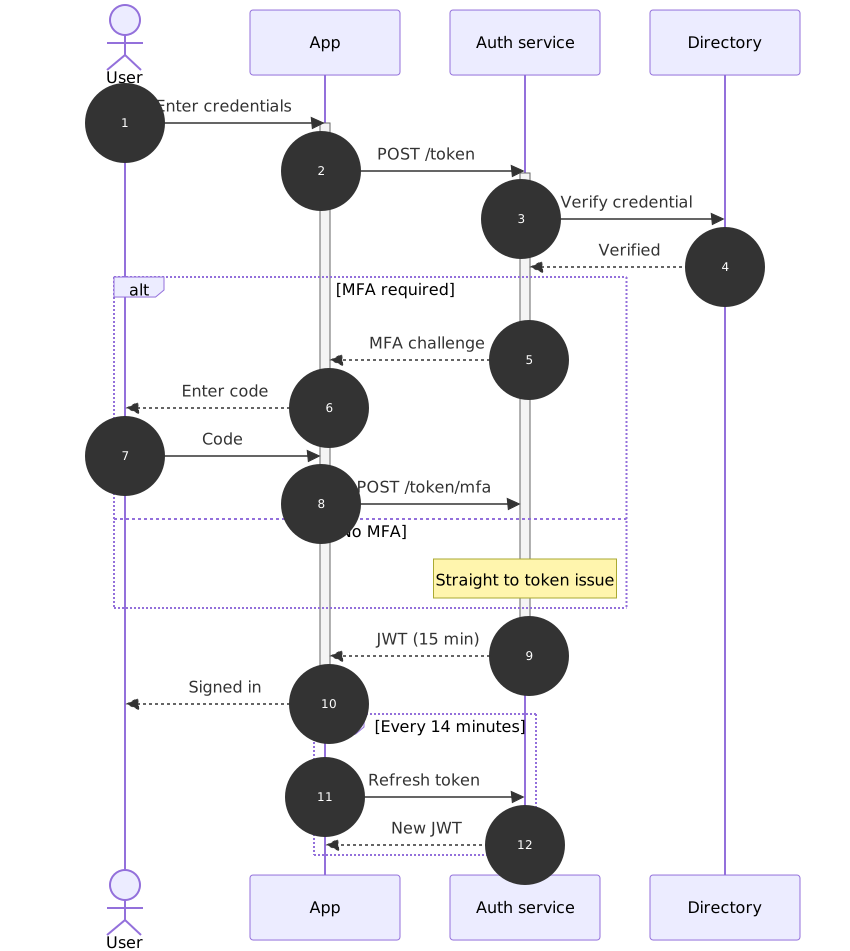
The source, which you can paste into a new diagram and edit:
#A few things that catch people out
Put the actor on the left and work rightwards. Readers expect the initiator first.
Show the failure path in an alt block; happy-path-only sequence diagrams miss the interesting part.
Note over is the right place for timing, expiry and retry rules.
#Related
Four types cover most of it.