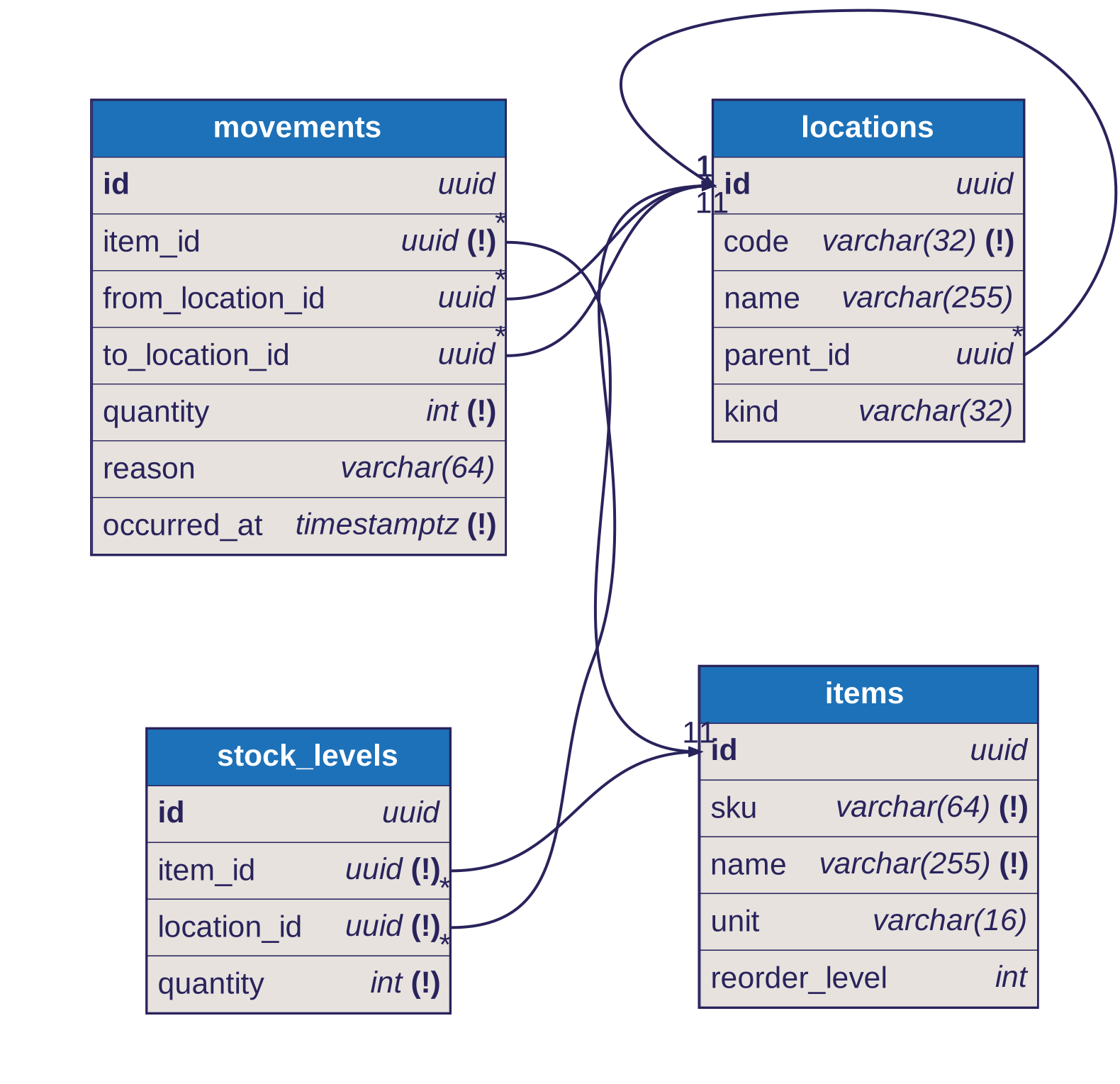
Inventory management (DBML)
An inventory schema is a good DBML example because the interesting part is the movement table, which is where most of the rules live.
#What this example shows
A movement table with a signed quantity rather than separate in and out tables.
Composite unique constraints across two columns.
A self-referencing hierarchy on locations.
#A worked example
Open it, edit it, or copy the source below.
The source, which you can paste into a new diagram and edit:
Table locations {
  id uuid [pk]
  code varchar(32) [unique, not null]
  name varchar(255)
  parent_id uuid [ref: > locations.id, note: 'Null for a top-level site']
  kind varchar(32) [note: 'site, zone, aisle, bin']
}

Table items {
  id uuid [pk]
  sku varchar(64) [unique, not null]
  name varchar(255) [not null]
  unit varchar(16) [default: 'each']
  reorder_level int [default: 0]
}

Table stock_levels {
  id uuid [pk]
  item_id uuid [ref: > items.id, not null]
  location_id uuid [ref: > locations.id, not null]
  quantity int [not null, default: 0]

  Indexes {
    (item_id, location_id) [unique]
  }
  Note: 'Derived from movements; kept for fast reads'
}

Table movements {
  id uuid [pk]
  item_id uuid [ref: > items.id, not null]
  from_location_id uuid [ref: > locations.id]
  to_location_id uuid [ref: > locations.id]
  quantity int [not null, note: 'Always positive; direction comes from the locations']
  reason varchar(64) [note: 'receipt, transfer, pick, adjustment, writeoff']
  occurred_at timestamptz [not null, default: `now()`]

  Indexes {
    (item_id, occurred_at)
  }
}
#Making it your own
A self-reference (parent_id to the same table) is how you draw a hierarchy in DBML.
Column notes are the cheapest documentation you will ever write.
Mark derived tables as derived, or somebody will write to them directly.
Close enough to the schema to stay true.