
Database schema diagram
A schema diagram goes further than an ER diagram: column types, defaults, indexes and constraints. DBML was designed for exactly this, and it reads like a simplified DDL.
Because the source is text, the diagram can be regenerated whenever the schema changes.
#When to reach for one
Documenting a database people will write queries against.
Reviewing a migration before it runs.
Handing a schema to another team without giving them database access.
#How to draw it in Capable
Route | Use when |
|---|---|
DBML | Types, defaults, indexes and notes, in one readable file. |
Mermaid | A lighter view when types are not the point. |
#A worked example
A schema in DBML, close enough to DDL to review:
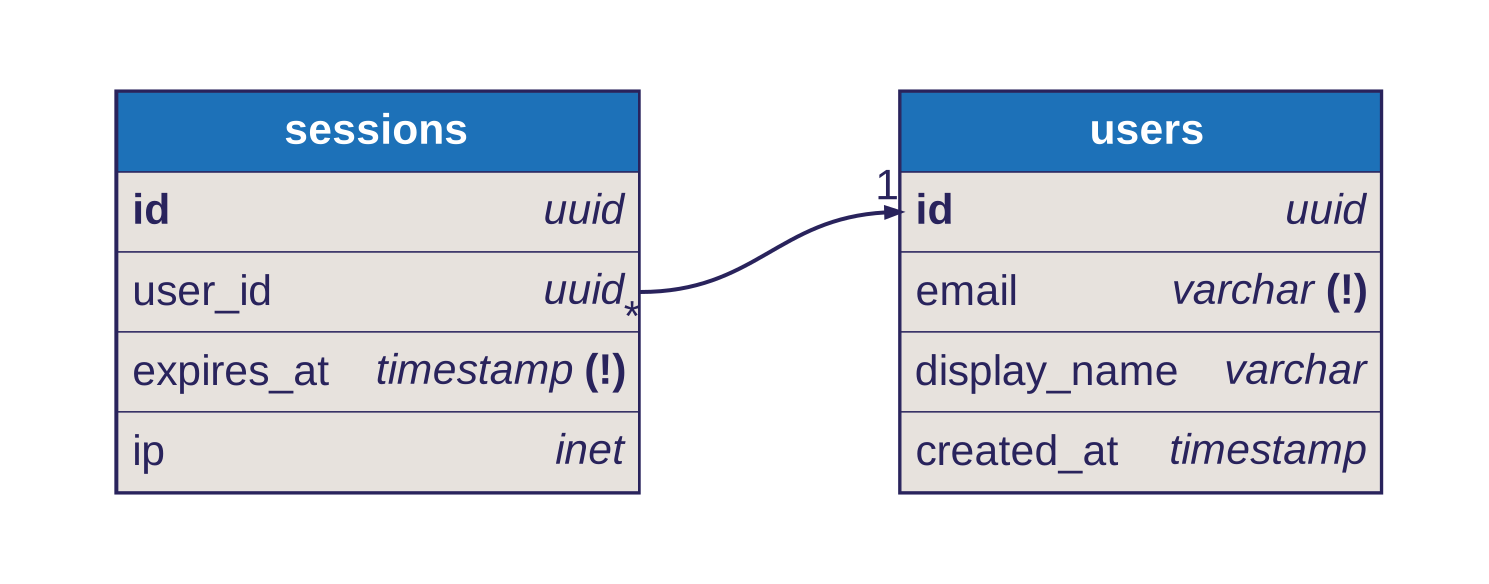
The source, which you can paste into a new diagram and edit:
#A few things that catch people out
Keep the diagram next to the migrations, not in a separate space nobody visits.
Notes on tables are worth more than notes in a wiki paragraph; they travel with the diagram.
Generate from your real schema where you can. Hand-written schema diagrams drift.
#Related
Get the cardinality right and the rest follows.