
Signal timing (WaveDrom)
WaveDrom draws waveforms from a wave string, one character per time unit. Once you know the alphabet, timing diagrams take a minute.
#What this example shows
p for a clock, 0 and 1 for levels, . to hold.
Numbered data periods with a labels array.
x for don't-care, which is not the same as low.
#A worked example
Open it, edit it, or copy the source below.
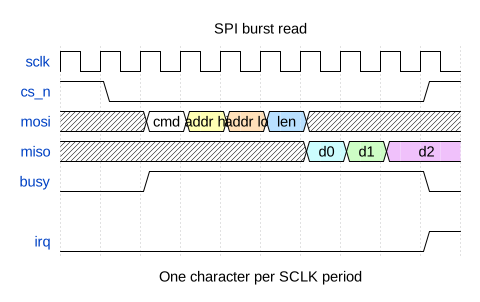
The source, which you can paste into a new diagram and edit:
#Making it your own
Every wave string must be the same length, or the signals will not line up.
An empty object inserts a gap between groups of signals.
Use x for don't-care; a flat 0 claims the line is genuinely low.
#Related
Specialists. Borrow one when you need it.