
DBML
DBML reads like a simplified DDL: tables, columns, types, defaults, indexes and references. Because it is close to real schema syntax, it is easy to keep honest.
It is the right choice when the diagram should be the schema documentation rather than an impression of it.
#What it is good at
Database documentation with types and constraints.
Reviewing a schema change before the migration is written.
Handing a schema to a team without giving them database access.
#What it draws
Diagram | Syntax starts with |
|---|---|
Table | Table users { id uuid [pk] } |
Reference | user_id uuid [ref: > users.id] |
Enum | Enum status { active inactive } |
Index | Indexes { (user_id, created_at) } |
Note | Note: 'One row per person' |
#A worked example
Tables, an enum, a reference and an index:
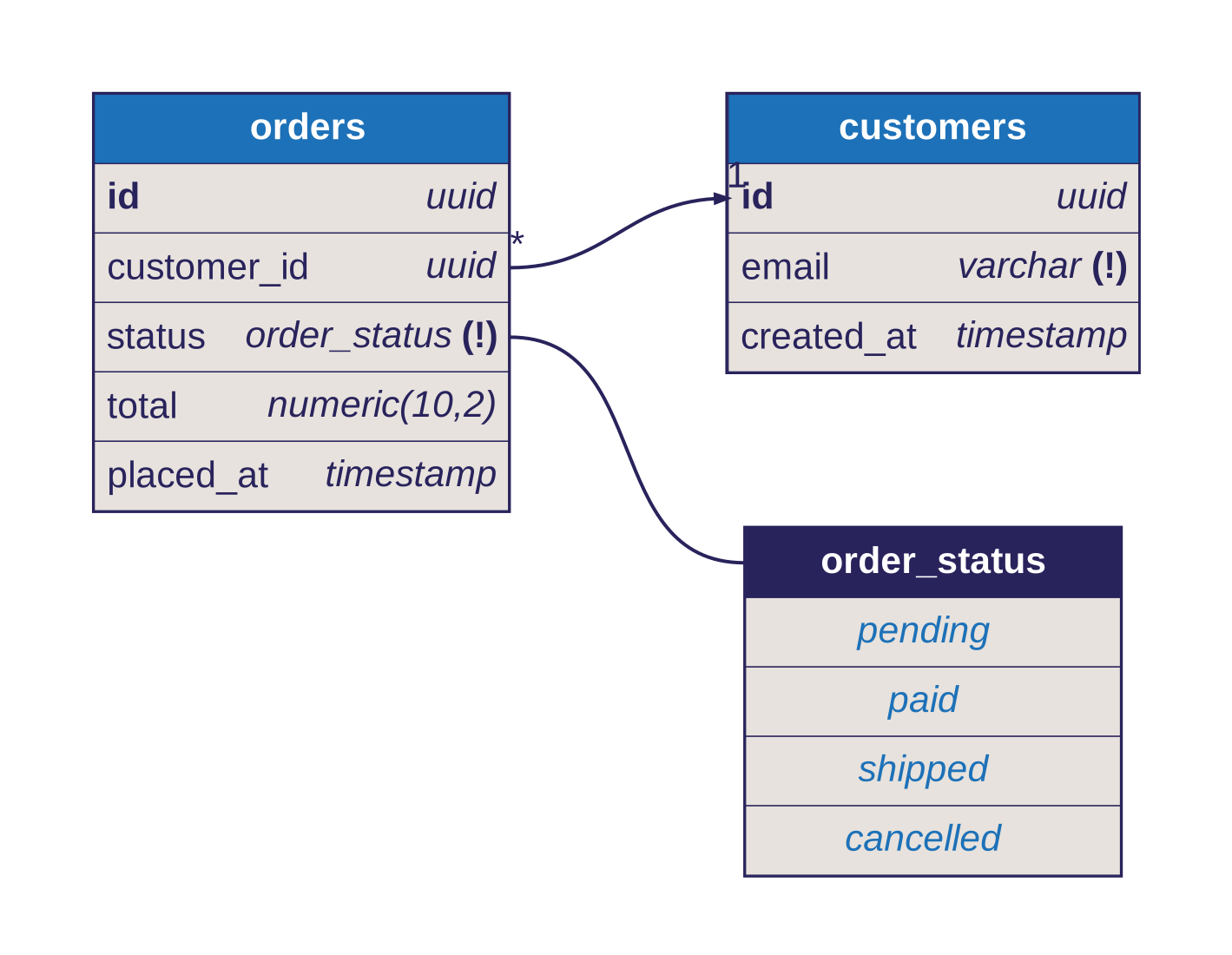
The source, which you can paste into a new diagram and edit:
#A few things that catch people out
Reference direction matters: > is many-to-one, < is one-to-many, - is one-to-one.
Notes on tables and columns travel with the diagram, which beats a separate wiki paragraph.
DBML documents a schema; it does not migrate one. Keep it beside the migrations.
#Related
Learn one properly. Borrow the rest when you need them.